

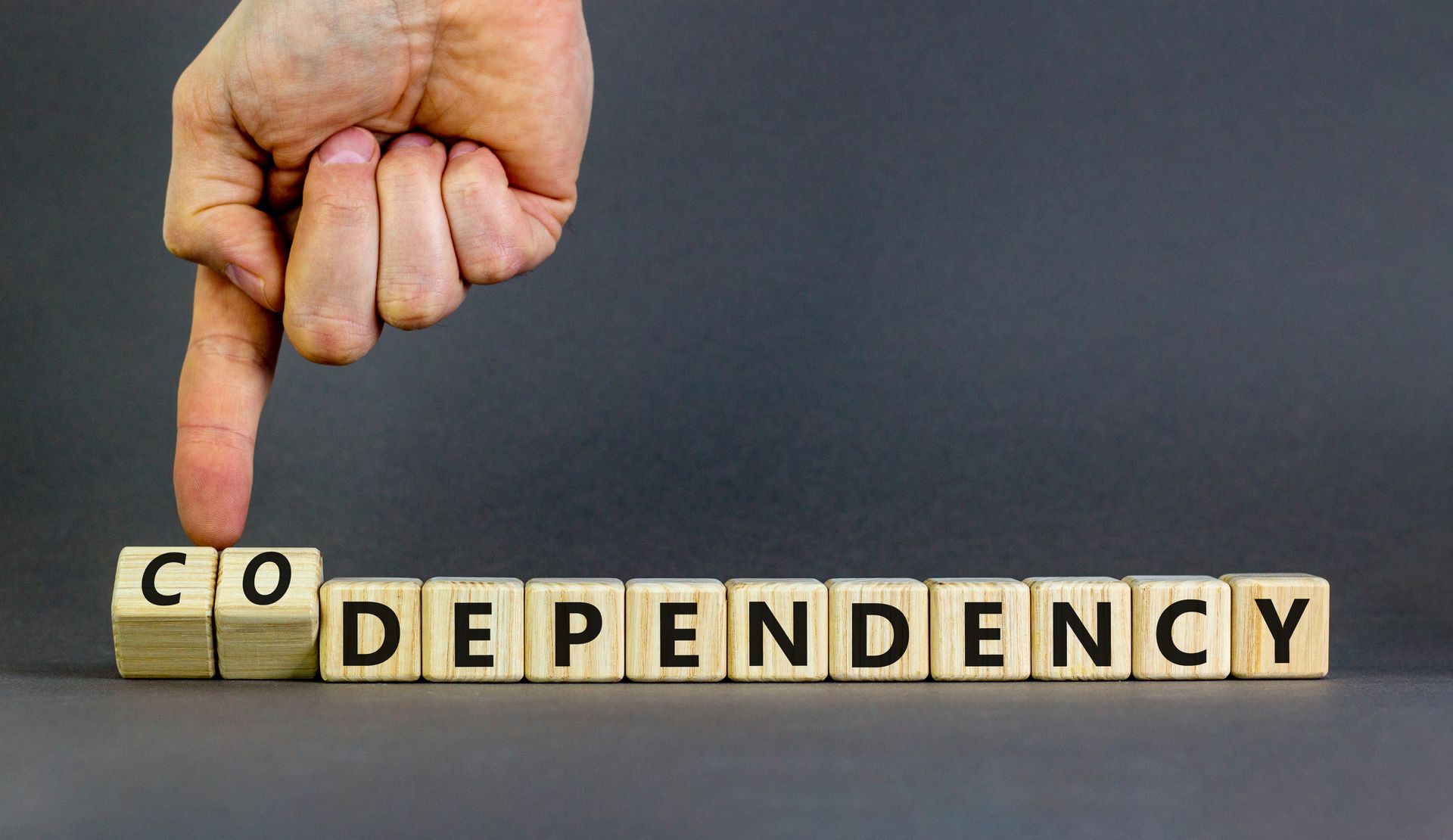
Codependency: Why It Happens and How to Break the Cycle
Key Points:
- Codependency is a relational pattern where you prioritize others' needs over your own to an unhealthy extreme
- It typically develops in childhood as an adaptive response to dysfunctional family dynamics
- Codependent behaviors include excessive caretaking, poor boundaries, fear of abandonment, and deriving self-worth from being needed
- These patterns feel like love but actually prevent genuine intimacy and personal growth
- Breaking codependency requires professional support, boundary work, and developing a separate sense of self
- Virtual psychiatric care provides accessible treatment for codependency and related mental health concerns
What Codependency Actually Is (And Isn't)
You've probably heard the term "codependent" thrown around casually. Someone who texts their partner too much. Someone who does favors for friends. Someone who cares deeply about their family.
But codependency isn't just being caring or attentive. It's not the same as being close to someone or wanting to help people you love.
Codependency is a specific relational pattern where:
- Your sense of self becomes entangled with another person
- You can't distinguish their feelings and needs from your own
- Your worth depends on being needed by someone else
- You sacrifice your own wellbeing to manage someone else's life
- You feel responsible for other people's emotions, choices, and problems
- You lose yourself completely in relationships
Think of it this way: healthy relationships are two separate people choosing to connect. Codependent relationships are two people trying to function as one, with at least one person disappearing in the process.
The person who disappears is the codependent one.
The Classic Signs You're Codependent
Codependency shows up in predictable patterns. See how many of these resonate:
You Can't Say No
You agree to things you don't want to do. You help when you're exhausted, broke, or overwhelmed. Saying no feels impossible, even when yes is destroying you.
It's not just about being kind. You physically feel unable to set limits. The thought of disappointing someone creates such intense anxiety that you'd rather sacrifice yourself than risk their displeasure.
You Need to Be Needed
You feel most valuable when someone depends on you. You unconsciously seek out people who need help, fixing, or rescuing. When someone becomes more independent, you feel anxious and useless.
Your relationships aren't based on mutual enjoyment but on your usefulness. If you're not solving someone's problems, you don't know what your role is.
You Take Responsibility for Others' Emotions
When someone you care about is upset, you feel responsible for fixing it. Their bad mood becomes your emergency. You'll do anything to make them feel better because their emotional state directly affects your internal peace.
You can't separate their feelings from yours. If they're anxious, you're anxious. If they're angry, you feel guilty. If they're sad, you feel like you failed.
You Have No Clear Boundaries
You don't know where you end and other people begin. Your boundaries are either non-existent or rigid walls with nothing in between.
People can:
- Help themselves to your time, money, and energy
- Make demands you feel obligated to meet
- Cross lines that make you uncomfortable
- Take advantage of your generosity repeatedly
You tell yourself you're being loving or flexible. But inside, you're resentful, exhausted, and feeling used.
You Lose Yourself in Relationships
When you enter a relationship, your identity dissolves. You:
- Adopt their interests and drop your own
- Change your opinions to match theirs
- Prioritize their schedule, preferences, and needs exclusively
- Stop spending time with friends or doing activities you enjoy
- Can't remember who you were before this relationship
You become whoever you think they need you to be.
You Stay in Unhealthy Relationships
You tolerate treatment you know is wrong. Disrespect, manipulation, addiction, or abuse. You stay because:
- You believe you can help them change
- You feel responsible for their wellbeing
- Leaving feels like abandoning someone who needs you
- You don't believe you deserve better
- Your identity is wrapped up in being their partner/friend/child
The relationship is clearly harming you, but leaving feels impossible.
You Seek External Validation Constantly
You can't trust your own judgment, feelings, or perceptions. You need others to tell you:
- How you should feel about situations
- Whether you're making the right choices
- If you're good enough
- What you should do next
- Whether you have the right to be upset
Your internal compass is broken or silent. You look outside yourself for direction constantly.
You're Controlling (While Thinking You're Helping)
You offer "help" that others didn't ask for. You manage, organize, advise, and intervene in other people's lives. You tell yourself it's because you care.
But underneath, you're controlling because:
- You're terrified of what will happen if you don't manage things
- You need to be needed
- You can't tolerate the anxiety of watching others make their own choices
- Controlling others feels easier than managing your own life
You Feel Resentful But Can't Express It
You give and give and give. Then you feel angry that others don't reciprocate or appreciate you enough. But you can't directly express this anger because:
- You're "not supposed to" need anything back
- Asking for what you need feels selfish
- You're afraid of conflict or rejection
- You've positioned yourself as the selfless helper
So the resentment builds silently, poisoning the relationship from within.
You Have No Sense of Self Outside Relationships
If someone asks about your interests, preferences, or goals, you draw a blank. You can tell them what your partner likes, what your kids need, what your friend is going through. But you?
You don't know. Your identity is entirely relational. You exist in reference to other people, not as a separate person with your own inner life.
If you're recognizing yourself in these patterns and they're affecting your mental health, professional support can help you develop healthier relationship patterns.
Why Codependency Develops
Codependency isn't a personality flaw or a choice. It's an adaptive response to specific childhood circumstances.
Growing Up in Dysfunctional Families
Codependency typically develops when children grow up in families where:
- One or both parents struggle with addiction
- Mental illness goes untreated
- Abuse (physical, emotional, sexual) is present
- Neglect is chronic
- Parents are emotionally immature or unavailable
- The family system is chaotic and unpredictable
In these environments, children learn to survive by:
- Monitoring adults' moods constantly
- Becoming hyperresponsible
- Suppressing their own needs
- Becoming the caretaker
- Earning love through usefulness
- Sacrificing themselves to maintain family stability
These adaptive strategies help children survive difficult childhoods. But they create dysfunctional patterns in adult relationships.
Parentification: When Children Become Parents
Parentification happens when a child must function as the emotional (or practical) parent to their own parents or siblings. You might have:
- Comforted your mother through her marriage problems
- Managed your father's emotions to prevent his anger
- Raised your younger siblings
- Been the "responsible one" who held the family together
- Served as the family therapist or mediator
This teaches you that:
- Your worth comes from being needed
- Relationships require self-sacrifice
- Your needs don't matter
- Love means taking care of others, not being cared for
- You're responsible for other people's wellbeing
Parentified children become codependent adults. They seek relationships where they can continue the only role they know, caretaker.
Enmeshed Family Systems
Some families have no boundaries between members. Everyone is overly involved in everyone else's business. Individual identity is discouraged or punished.
In enmeshed families:
- Privacy is seen as rejection or secrecy
- Differentiation is treated as betrayal
- You're expected to prioritize family over everything
- Individual needs are selfish
- Emotional fusion is considered closeness
Children from enmeshed families never learn to be separate people. They carry this lack of differentiation into adult relationships, creating codependent dynamics.
Attachment Wounds
Codependency often develops alongside anxious attachment patterns. If your early caregivers were inconsistent, unavailable, or conditional with love, you learned:
- Relationships are unpredictable and require constant effort
- You must earn love by being good enough
- Your needs are burdensome
- Abandonment is always possible
- You're only worthy when you're useful
These attachment wounds create codependent patterns where you desperately try to secure love by being indispensable.
Cultural and Gender Messages
Certain cultural and gender socialization also contributes to codependency:
- Women are taught to be selfless caregivers
- Men are taught to solve problems and protect
- Many cultures emphasize family obligation over individual needs
- Religious messages sometimes equate self-sacrifice with virtue
- "Good" people put others first
These messages aren't wrong in themselves. But when combined with childhood wounds, they reinforce codependent patterns.
Understanding the roots of your codependency reduces shame. You weren't weak or foolish. You were adapting to circumstances beyond your control.
Codependency vs. Healthy Interdependence
It's important to distinguish codependency from healthy interdependence because they can look similar on the surface.
Healthy Interdependence
In healthy relationships:
- You maintain separate identities while choosing to connect
- You support each other without losing yourselves
- You can say no and respect others' nos
- You're responsible for your own emotions while caring about each other's
- You give and receive in balanced ways
- You enhance each other's lives without being responsible for each other's happiness
- You can function independently but prefer to be together
Codependency
In codependent relationships:
- Your identities are fused, not separate
- One person typically does most of the supporting
- No is nearly impossible
- You feel responsible for the other person's emotions
- Giving is compulsive and one-sided
- You need the other person to feel whole or worthy
- You can't function well independently
The key difference? Choice and separateness. Healthy interdependence involves two whole people choosing connection. Codependency involves fractured people trying to complete each other.
The Types of Codependent Relationships
Codependency shows up in various relationship types:
Romantic Partnerships
This is where codependency is most recognized. One partner (or both) loses themselves completely in the relationship. They might:
- Tolerate infidelity, addiction, or abuse
- Sacrifice career, friendships, or dreams for the relationship
- Feel unable to leave despite being miserable
- Define their entire identity through being someone's partner
- Enable destructive behaviors while calling it love
Parent-Child Relationships
Codependency can run both directions:
Codependent Parents:
- Can't let children become independent
- Live vicariously through their children
- Make children responsible for their emotional wellbeing
- Have no identity outside of parenting
- Become enmeshed with children's lives
Codependent Adult Children:
- Can't separate from parents
- Feel responsible for parents' happiness
- Sacrifice their own lives to care for or please parents
- Can't make decisions without parental approval
- Feel guilty for having separate lives
Friendships
Codependent friendships involve:
- One person constantly rescuing or helping the other
- Inability to be honest for fear of upsetting the friend
- Tolerating one-sided dynamics
- Feeling responsible for the friend's problems
- Losing yourself to maintain the friendship
Work Relationships
Workplace codependency includes:
- Overworking to prove your worth
- Being unable to delegate or say no
- Feeling responsible for others' work
- Sacrificing health and personal life for the job
- Defining yourself entirely by your work
Codependency with Addicts
This is sometimes called "enabling." You:
- Shield the addict from consequences of their addiction
- Make excuses for their behavior
- Take over their responsibilities
- Prioritize their needs over your own and children's
- Believe you can save them if you just love them enough
All these relationships share the core pattern: you lose yourself trying to manage or save someone else.
The Painful Paradox of Codependency
Here's what makes codependency so hard to recognize and change: the behaviors that define it feel like love.
Sacrificing yourself feels like devotion. Being needed feels like purpose. Helping feels like caring. Managing others' lives feels like responsibility.
You tell yourself:
- "This is what you do for people you love"
- "They need me"
- "I'm just being a good partner/friend/child/parent"
- "Love means putting others first"
- "If I don't help, who will?"
But underneath these narratives, codependency is actually:
- Fear masquerading as love
- Control disguised as help
- Anxiety presented as caring
- Worthlessness compensated by being needed
- Avoidance of your own life through focus on others
The hardest truth? Codependency prevents real intimacy. When you have no self to share, you can't truly connect. When you're managing someone instead of knowing them, there's no genuine relationship.
Codependency feels like intense connection. But it's actually a profound disconnection, both from yourself and the other person.
Why Codependency Is So Hard to Change
If codependency is harmful, why can't people just stop? Because:
It's All You Know
If you learned codependent patterns in childhood, they feel normal. Healthy boundaries feel foreign, selfish, or wrong. Your nervous system is wired for codependency.
It Serves a Purpose
Codependency helps you:
- Avoid looking at your own life and problems
- Feel valuable and needed
- Maintain the illusion of control
- Stay in your comfort zone (even if that zone is uncomfortable)
- Avoid the terror of being alone or abandoned
- Replicate familiar family dynamics
Giving up codependency means facing what you've been avoiding.
Others Resist Your Change
When you start setting boundaries, people who benefited from your codependency push back. They might:
- Accuse you of being selfish or changing
- Withdraw affection to punish you
- Create crises to pull you back in
- Make you feel guilty
- Find other codependent people to replace you
This resistance is painful and can make you question whether changing is worth it.
You Don't Know Who You Are Without It
Your entire identity might be built on being the helper, the strong one, the selfless one. If you stop, who are you?
This existential question is terrifying. It's easier to stay codependent than face the emptiness of not knowing yourself.
The Anxiety Is Overwhelming
When you first try to change codependent patterns, your anxiety skyrockets. You're:
- Terrified the other person will leave
- Convinced something terrible will happen if you don't intervene
- Unable to tolerate watching others struggle
- Flooded with guilt and shame
Most people return to codependent behaviors just to stop the anxiety.
This is why professional support is so important. Therapy can help you tolerate the discomfort of change without reverting to old patterns.
How to Start Breaking Free from Codependency
Changing codependency is a process, not a single decision. Here's how to begin:
Step 1: Acknowledge the Pattern
Stop calling it love, caring, or responsibility. Name it as codependency. Recognize that:
- These patterns developed for understandable reasons
- They made sense in childhood but don't serve you now
- You're not bad or weak, you're stuck in learned behaviors
- Wanting to change doesn't mean you don't care about people
Acknowledgment without shame is the foundation.
Step 2: Work with a Professional
This isn't optional for most people. Codependency is too deeply rooted to address alone. A therapist who understands codependency can help you:
- Identify specific patterns in your relationships
- Understand the childhood origins
- Develop and practice boundaries
- Build tolerance for the anxiety that comes with change
- Process the grief of relationships that don't survive your growth
- Develop a separate sense of self
At Virtual Psychiatric Care, our providers specialize in relationship patterns including codependency. Learn about our treatment approaches.
Step 3: Learn What You Need
Codependent people often have no idea what they need because they've never paid attention. Start noticing:
- What do you actually enjoy?
- What drains your energy?
- What makes you feel good?
- What are your preferences on everything from food to friendships?
- What do you value?
- What do you want your life to look like?
This feels selfish at first. It's not. It's developing a self.
Step 4: Practice Saying No
Start small. Say no to things that don't matter much. Practice the words:
- "No, I can't do that"
- "That doesn't work for me"
- "I'm not available"
- "I need to think about it"
You don't need elaborate explanations. No is a complete sentence.
Expect massive anxiety. Your nervous system will scream that something terrible is happening. Sit with it.
The anxiety will pass. The relationship will survive or it won't, but either way, you're building the muscle of boundary-setting.
Step 5: Let People Experience Consequences
Stop rescuing, fixing, managing, and solving. When someone you care about makes poor choices:
- Don't bail them out
- Don't offer unsolicited advice
- Don't take over their responsibilities
- Don't protect them from natural consequences
This feels cruel. It's not. It's allowing people to be adults responsible for their own lives.
Step 6: Get Comfortable with Discomfort
Other people's emotions, problems, and struggles are going to make you deeply uncomfortable. You'll want to jump in and fix things.
Practice tolerating the discomfort instead. Use grounding techniques:
- Remind yourself, "Their feelings are not my responsibility"
- "I can care about them without solving this for them"
- "They're capable of handling this"
- "My discomfort is not an emergency"
The discomfort will decrease over time as you practice.
Step 7: Develop Your Own Life
While you've been focused on everyone else, you probably haven't built a life of your own. Start now:
- Reconnect with old interests or discover new ones
- Build friendships based on mutual enjoyment, not neediness
- Pursue goals that matter to you
- Create a life you'd want even if you were alone
This is terrifying for codependent people. The point isn't to be alone, but to be whole regardless of relationship status.
Step 8: Address the Underlying Wounds
Codependency typically sits on top of deeper issues:
- Childhood trauma that needs processing
- Attachment wounds that need healing
- Shame that needs addressing
- Anxiety or depression that needs treatment
Working on codependency means working on these underlying conditions. Comprehensive treatment addresses all layers, not just behavior change.
Step 9: Expect Relationship Changes
When you stop being codependent, your relationships will change. Some will deepen and become healthier. Others will end.
People who only related to you as a helper/fixer/rescuer may not know what to do with the new you. They might:
- Leave
- Get angry
- Try to pull you back into old patterns
- Find someone else to depend on
This is painful but necessary. Relationships built on codependency can't survive your health. That's okay. Better relationships await.
Step 10: Practice Self-Compassion
You'll slip back into codependent patterns. You'll say yes when you meant no. You'll over-function in relationships. You'll lose yourself again.
This doesn't mean you're failing. Codependency is deeply grooved neural pathways. Change happens gradually through repeated practice, not perfection.
Treat yourself with the compassion and patience you'd offer someone else struggling with deep-seated patterns.
Setting Boundaries That Actually Stick
Codependent people often know they "should" set boundaries but can't maintain them. Here's how to create boundaries that hold:
Understand What Boundaries Are
Boundaries aren't about controlling others. They're about managing yourself. A boundary is:
- A limit you set on what you will or won't do
- A clear statement of what behavior you'll accept
- An action you'll take to protect yourself
- Self-responsibility, not other-responsibility
Make Them Clear and Specific
Vague boundaries don't work. Instead of "I need more respect," try:
- "I won't continue conversations where I'm being yelled at. If you raise your voice, I'll leave the room."
- "I'm not available after 9 PM for non-emergencies."
- "I won't lend money anymore."
Specificity makes boundaries enforceable.
Follow Through Consistently
A boundary without enforcement is just a suggestion. If you say you'll leave when someone yells but you stay, you've taught them your boundary doesn't mean anything.
Following through is hard. It triggers guilt and anxiety. Do it anyway. Consistency is what makes boundaries real.
Expect Testing
People will test your boundaries, especially if you've never had them before. They'll:
- Push harder
- Create emergencies
- Make you feel guilty
- Accuse you of not caring
This is normal. Hold firm. Testing usually decreases when people realize you mean what you say.
Start with Low-Stakes Situations
Don't practice your first boundary with your most manipulative relationship. Start with:
- Store clerks
- Acquaintances
- Low-pressure situations
- People you don't see often
Build the skill in easier contexts before applying it to difficult relationships.
Get Support for the Aftermath
Setting boundaries triggers intense emotions. Have support in place:
- A therapist you can process with
- Friends who understand what you're doing
- Support groups for codependency
- Grounding techniques for anxiety
You don't have to do this alone.
Codependency in the Digital Age
Modern technology creates new opportunities for codependent behavior:
Constant Availability
Smartphones make it possible to be available 24/7. Codependent people often:
- Respond to messages immediately, no matter the time
- Feel anxious if they can't check their phone
- Monitor others' online activity
- Feel obligated to be constantly accessible
Healthy boundaries include: turning off notifications, setting communication hours, and recognizing you don't owe instant responses.
Social Media Monitoring
Digital codependency includes:
- Obsessively checking someone's social media
- Interpreting posts for hidden meaning about your relationship
- Using social media to track someone's mood or activities
- Feeling responsible for others' online emotional states
This digital monitoring is codependency in a new format.
Enabling via Technology
You can enable others digitally by:
- Sending money through apps to rescue poor financial decisions
- Texting constant reassurance to someone who won't seek proper help
- Managing someone's life via text
- Sacrificing sleep to be available for late-night crisis texts
Technology makes it easier to over-function in relationships.
When Codependency Coexists with Other Conditions
Codependency rarely exists in isolation. It often coexists with:
Anxiety Disorders
The hypervigilance and inability to tolerate uncertainty inherent in codependency often involves diagnosable anxiety. Treatment for both is important.
Depression
Losing yourself in codependent relationships while sacrificing your needs often leads to depression. You might not even realize you're depressed because you're so focused outward.
PTSD or Complex PTSD
If codependency developed in response to childhood trauma, you might also have PTSD symptoms that need treatment alongside the relationship patterns.
Eating Disorders
Some people develop eating disorders as one area of life they can control when everything else feels chaotic.
Substance Use
Using alcohol or drugs to numb the pain of codependent relationships, or to cope with the anxiety of setting boundaries, is common.
Comprehensive treatment addresses all of these conditions together. Our providers can evaluate whether you have co-occurring conditions requiring treatment.
If you're in crisis or experiencing thoughts of self-harm, please visit our crisis resources page for immediate support.
What Recovery Looks Like
Breaking free from codependency doesn't happen overnight. But here's what changes over time:
Early Recovery (Months 1-6):
- Intense discomfort and anxiety
- Lots of slipping back into old patterns
- Relationships becoming unstable
- Questioning whether change is worth it
- Learning what boundaries even are
- Beginning to notice your own needs
Middle Recovery (Months 6-18):
- Anxiety decreasing somewhat
- Boundaries becoming more consistent
- Some relationships ending, others improving
- Starting to develop separate interests
- Less automatic people-pleasing
- More tolerance for others' discomfort
Later Recovery (18+ Months):
- Healthy boundaries feeling more natural
- Clearer sense of self and preferences
- Ability to be alone without panic
- Relationships based on choice rather than need
- Less need for external validation
- Capacity for genuine intimacy (not codependent fusion)
Recovery isn't linear. You'll have good periods and setbacks. But the general trajectory is toward more selfhood, clearer boundaries, and healthier relationships.
FAQs About Codependency
FAQs About Virtual Psychiatric Care
You Can Find Yourself Again
Somewhere underneath the codependent patterns, there's a person you've lost touch with. Someone with preferences, dreams, needs, and boundaries. Someone who deserves relationships based on genuine connection rather than desperate need.
That person is still there, waiting to be rediscovered.
Breaking free from codependency doesn't mean becoming selfish or uncaring. It means becoming whole. It means having a self to bring to relationships instead of disappearing into them.
It means choosing connection from fullness rather than seeking completion through others.
The journey isn't easy. You'll face intense anxiety. You'll question whether you're being too selfish. You'll miss the familiar dynamic even though it was destroying you. Some relationships won't survive your growth.
But on the other side is freedom. Freedom to be yourself. Freedom to have needs. Freedom to say no.
Freedom to choose relationships that enhance your life rather than consume it.
You deserve that freedom.
At Virtual Psychiatric Care, we specialize in helping people break free from codependent patterns and develop healthier ways of relating. We understand that these patterns developed for good reasons and that changing them requires compassionate, skilled support.
You don't have to stay lost in codependency. You don't have to keep sacrificing yourself. You don't have to figure this out alone.
Schedule your appointment today or call 786-761-1155 to begin the journey back to yourself.
Virtual Psychiatric Care
Phone: 786-761-1155
Email: Support@VirtualPsychiatricCare.com
Contact Us |
What We Treat |
How It Works |
Crisis Resources
Disclaimer: The information provided on this blog is for general informational purposes only and is not intended as, and should not be considered, medical advice. All information, content, and material available on this blog are for general informational purposes only. Readers are advised to consult with a qualified healthcare professional for medical advice, diagnosis, or treatment. The author and the blog disclaim any liability for the decisions you make based on the information provided. Always seek the advice of your physician or other qualified health provider with any questions you may have regarding a medical condition.






Complete Guide to Virtual Embedded Psychiatric Provider Partnerships for Mental Health Organizations